Architecture · Workshop
Bamboo Construction
Crafting Innovative Roofing Solutions for the University Pavilion

About the Workshop
Bamboo is one of the most structurally capable and rapidly renewable building materials available, yet it remains underused in contemporary construction because working with it requires starting from the material rather than the brief. This workshop set out to explore that relationship: understanding what bamboo can do before deciding what to make it do, with the goal of developing an innovative roofing system for the university pavilion.
Working with bamboo demands a different kind of architectural thinking, one that begins with the material's natural properties rather than imposing a predetermined form.
My Role
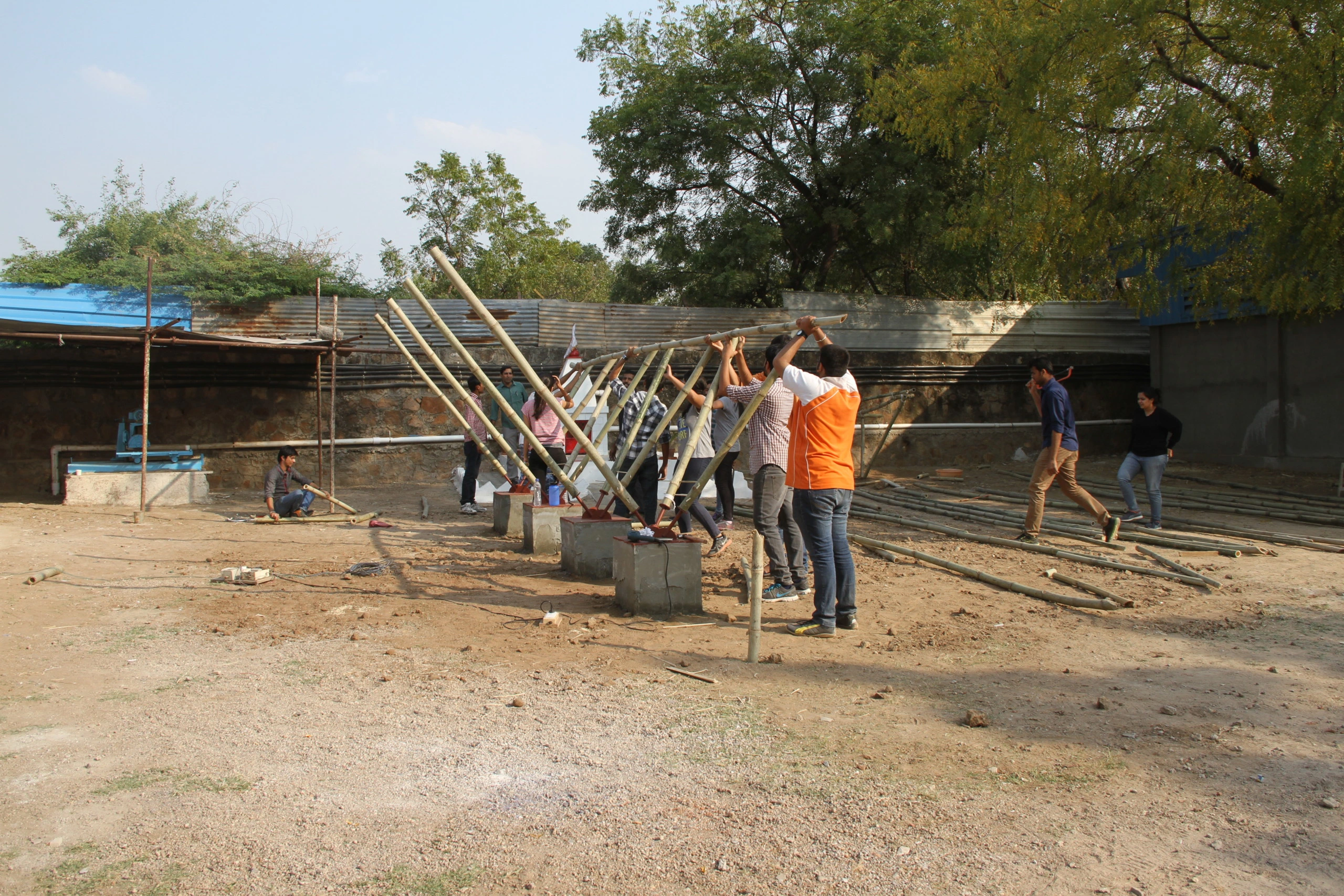
I was part of a sixteen-person team that took the project from concept to built structure. That meant contributing across all three phases: exploring joinery methods, developing the conceptual system through sketches, and participating in the on-site prototype construction.
From Sketch to Structure
The workshop moved through three distinct phases, each revealing something about bamboo that the previous one couldn't.
Exploring Joinery Methods
The first phase focused on understanding how bamboo connects to itself. Unlike timber or steel, bamboo cannot be nailed or bolted without splitting, so the joinery determines what the structure can become. We explored lashing techniques, compression joints, and binding methods, learning which connections could carry load and which were purely formal.
Conceptual System Design
With the joinery constraints understood, we moved into system design. Sketching with bamboo means working within the proportions the material offers rather than the proportions you might prefer. The culms come in fixed lengths and diameters, and the design has to begin from there. Within those constraints, the material is remarkably expressive: it bends into curves that would be expensive and complex to achieve in any other structural material.
On-Site Prototype Construction
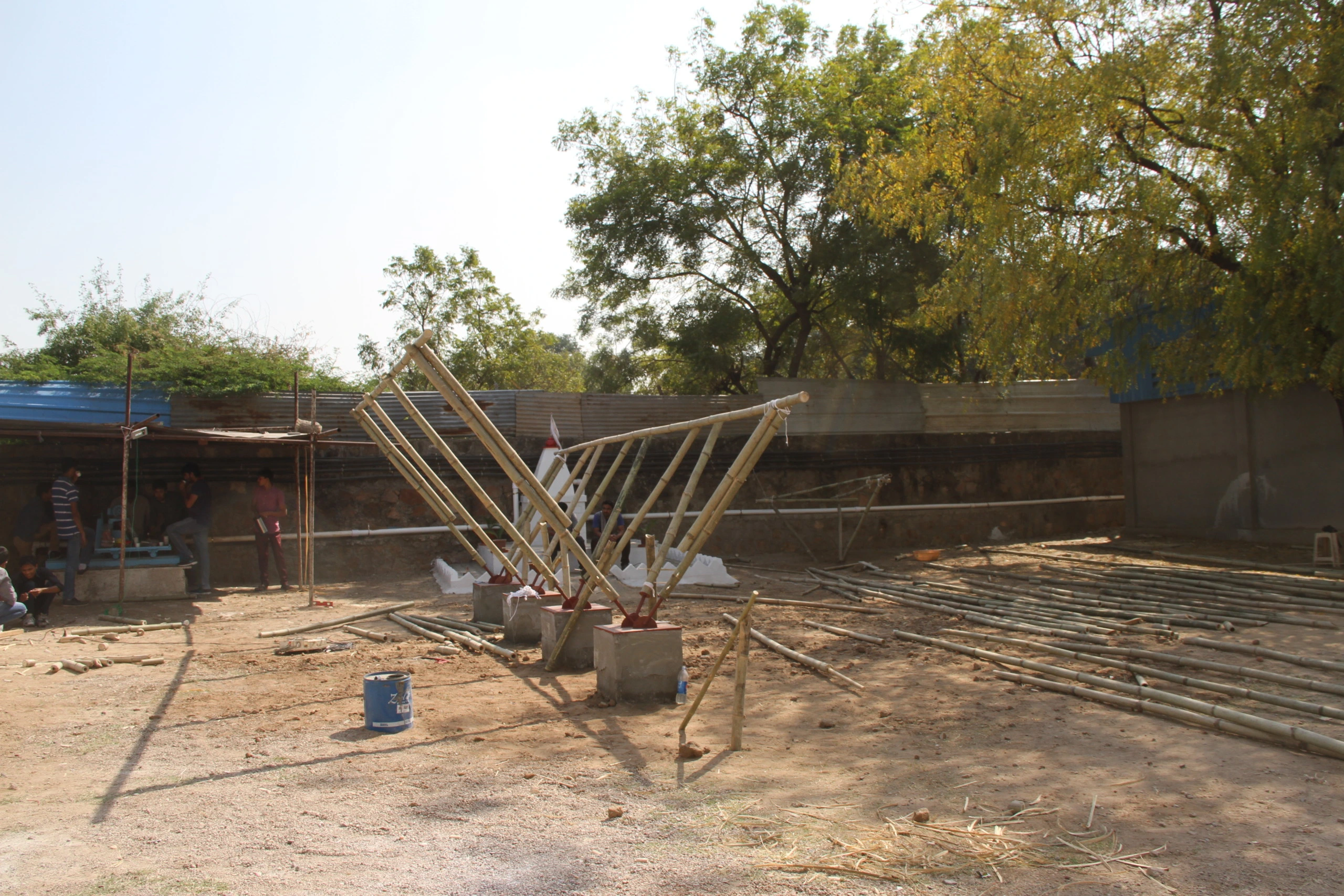
The build revealed what no sketch could. At full scale, bamboo's versatility becomes visceral; the curves that looked good on paper felt entirely different when they were overhead and load-bearing. The prototype transformed the workshop from an exercise in material understanding into a working demonstration of what bamboo construction can actually do.



What Bamboo Taught Us
Bamboo is one of the most underutilized structural materials available. It can function as a column, beam, wall, roof, or floor, often within the same structure, and at a fraction of the cost of industrial alternatives. For temporary and semi-permanent structures like street markets and vendor spaces, it offers a viable, affordable, and rapidly deployable alternative to steel and concrete. The workshop made that potential tangible: what started as sketches and joinery studies became a full-scale structure that demonstrated what the material is genuinely capable of.