Illustration Design · Data Visualization
Earth in Flux
Visualizing Climate Change Through Data and Illustration
About the Series
Earth in Flux is a series of seven data-driven illustrations, each examining a distinct dimension of the climate crisis: greenhouse gas escalation, glacier retreat, coral bleaching, deforestation, and the quiet disappearance of urban lakes. The series moves deliberately from planetary systems to individual choices, tracing the scale of the crisis down to the decisions made every day by ordinary people.
Each piece translates scientific data into visual form, making the scale and stakes of environmental change legible to a broad audience. Together, they build a portrait of a planet under pressure, and the choices, individual and collective, that brought it here.
Greenhouse Gas Escalation
The illustration maps the escalating volume of greenhouse gases produced by human activity between 1990 and 2010, a period during which scientists projected a potential rise in global average temperature of 0.3 to 4.8°C, with cascading consequences for rainfall, drought, and food production.
The piece is divided into four sections, each representing a five-year period. Every color corresponds to a specific greenhouse gas and the size of each circle represents its volume in the atmosphere. Together they form a growing, densifying field that makes the accumulation visceral rather than abstract.
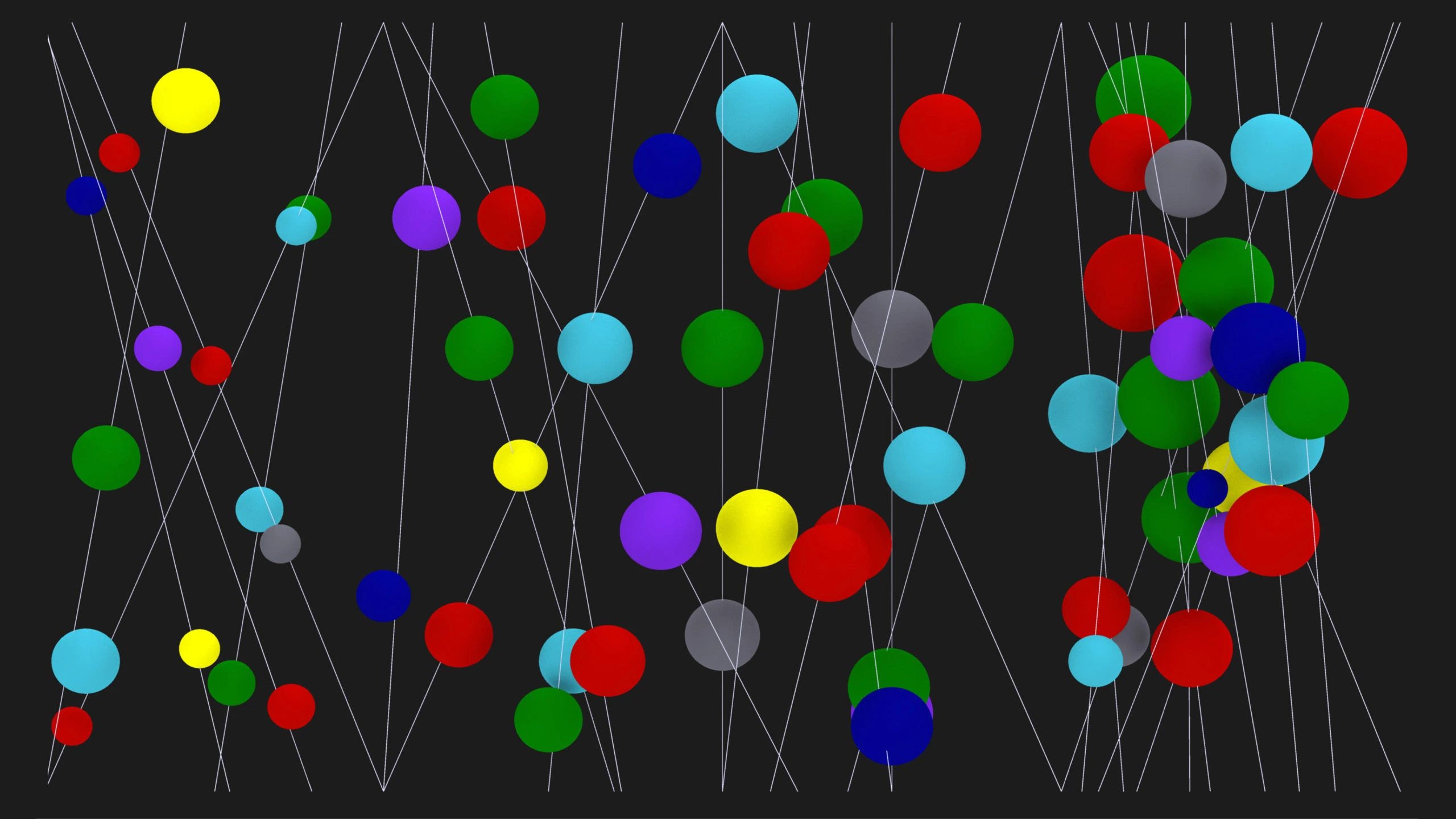
Inspired by World Resources Institute: Climate Analysis Indicators Tool 1990–2010
Deforestation
Forests cover the planet's surface the way a canopy covers the ground beneath it; densely, interconnectedly, and with everything depending on what stays intact. Second only to oceans, they are the planet's largest carbon storehouses, and home to the majority of terrestrial species on Earth.
The illustration visualizes global forest loss between 2000 and 2016, viewed as if from above. Green marks what remains. Gray marks what is gone. The nearly three-fold increase in deforestation over those sixteen years becomes visible not as a statistic but as a pattern of holes; a canopy with more and more light coming through.
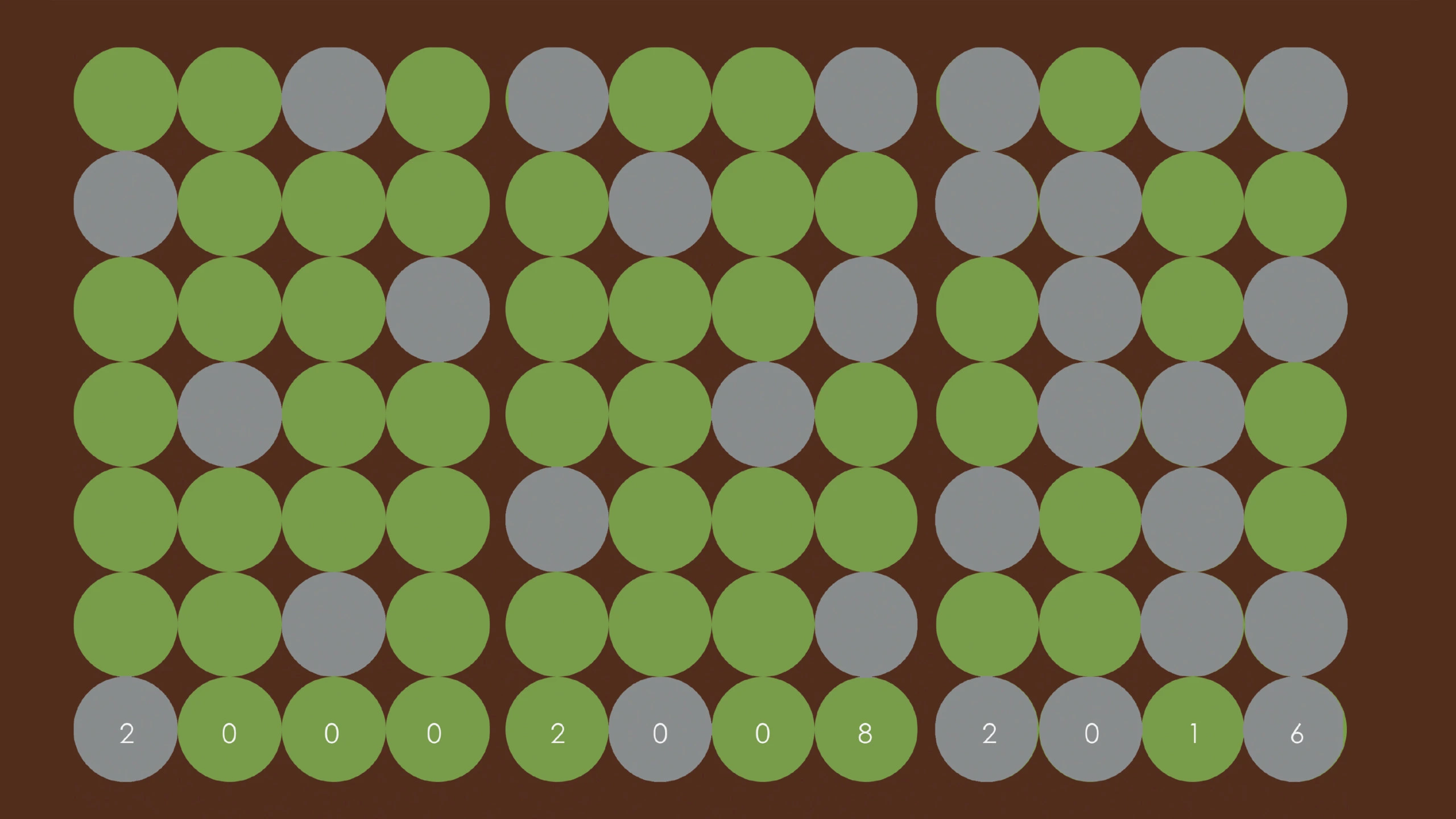
Inspired by Forest Area (% of land area) data provided by The World Bank
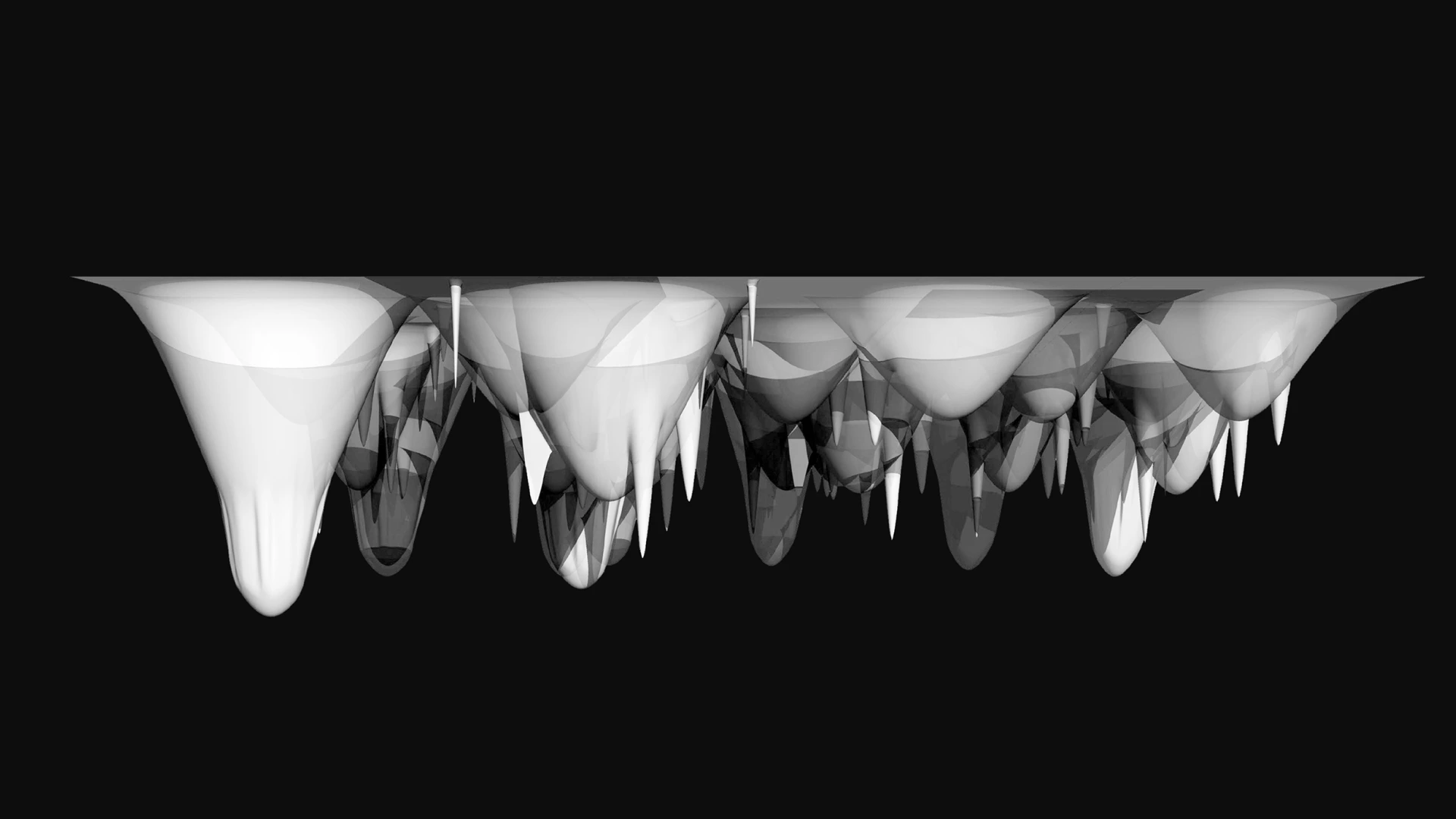
Retreat of the Gangotri Glacier
The Gangotri Glacier is the largest glacier in the Himalayas and the primary source of the Ganges River, which provides water and electricity to hundreds of millions of people across India and Bangladesh. Its retreat is not an isolated environmental event; it carries consequences for conflicts, migration, food security, and ecosystem stability across an entire region.
The illustration represents the glacier's mass over time, with deepening shades of black marking what has already gone. Black because it is not coming back. The water that fed the Ganges for centuries is gone permanently, and the illustration makes no pretense otherwise.
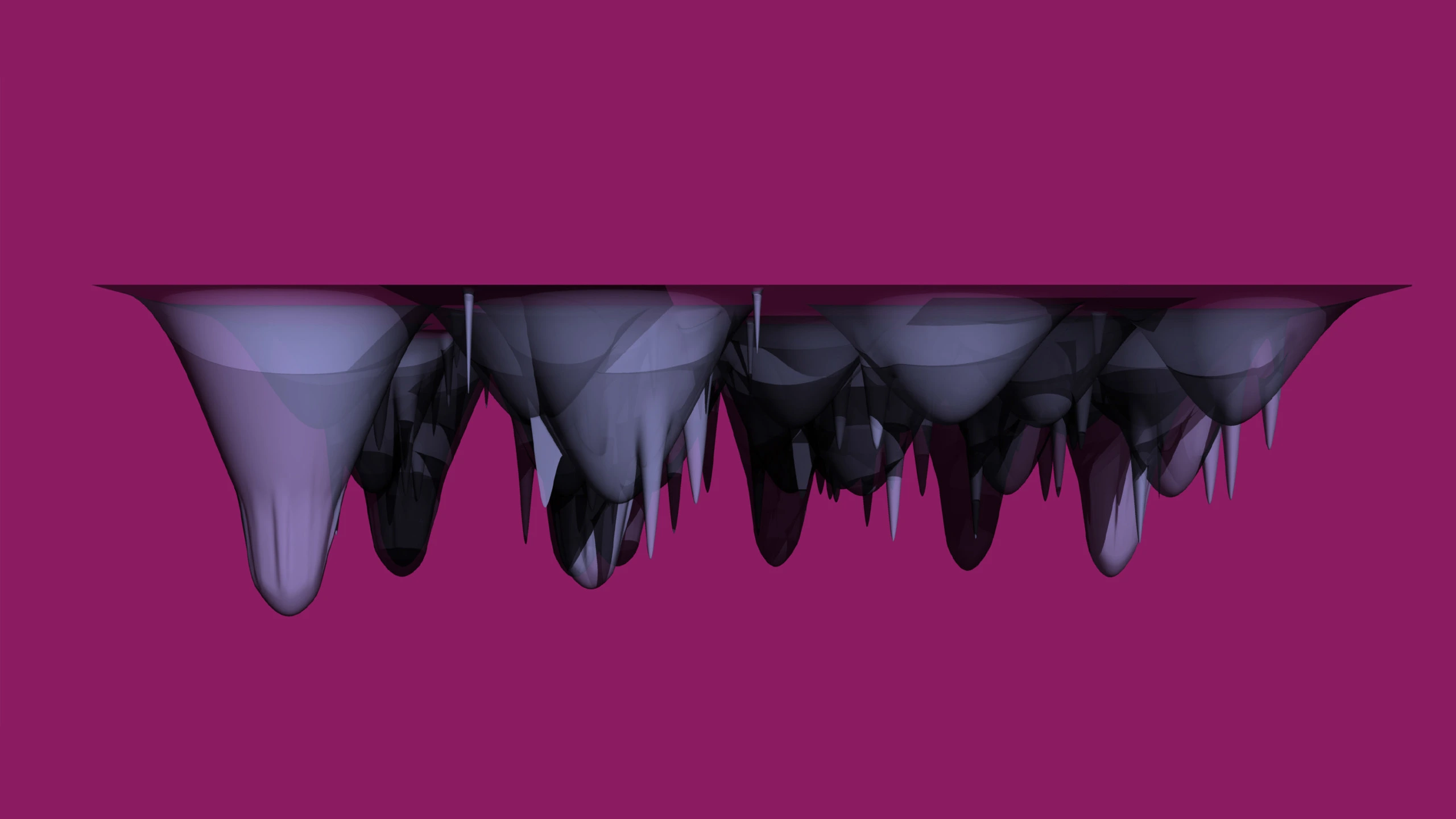
Inspired by the Working Group on Himalayan Glaciology, International Commission for Snow and Ice: 1999
Coral Reef Collapse
Coral reefs support approximately 25% of all ocean species despite covering less than 1% of the ocean floor. When water temperature rises, corals expel the symbiotic algae that give them both their color and their energy, turning white and leaving the ecosystem that depended on them without a foundation.
The illustration shows two states of the same reef. The first is a dense tangle of colored, curving forms; interconnected, alive, layered in the way a functioning ecosystem actually is. The second replaces that with straight monochrome lines cutting through, displacing the color and the curves, leaving behind the shape of a system with nothing living inside it. What you admired on the left is still visible on the right. It is just gone.

Story of Dying Lakes
Lakes are rarely thought of as systems, but they are. The three interconnected lakes of Makarba in Ahmedabad functioned as one: when one overflowed, water moved naturally into the next. That relationship sustained the ecosystem for centuries.
The illustration traces what happened when that relationship was severed. Highways cut through the connections. Sand mining, land use changes, and groundwater extraction drew the lakes down independently, each one now isolated and declining without the others to sustain it. Varying shades of blue map the water levels across time, from full to diminished to near gone. A local story, but not a local problem.
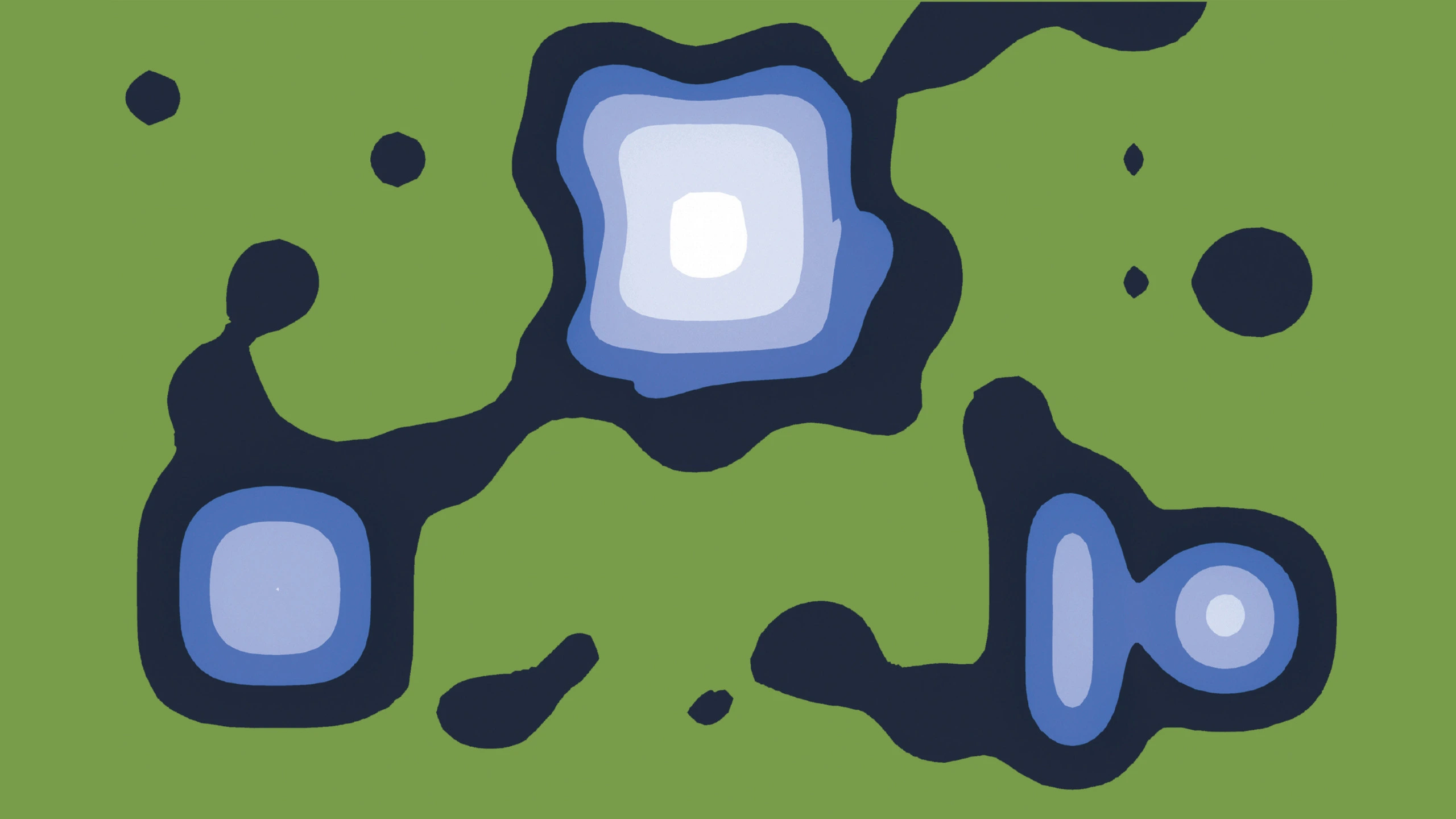
Inspired by the story of Puttenahalli Neighborhood Lake Improvement Trust
The Path We Have Taken
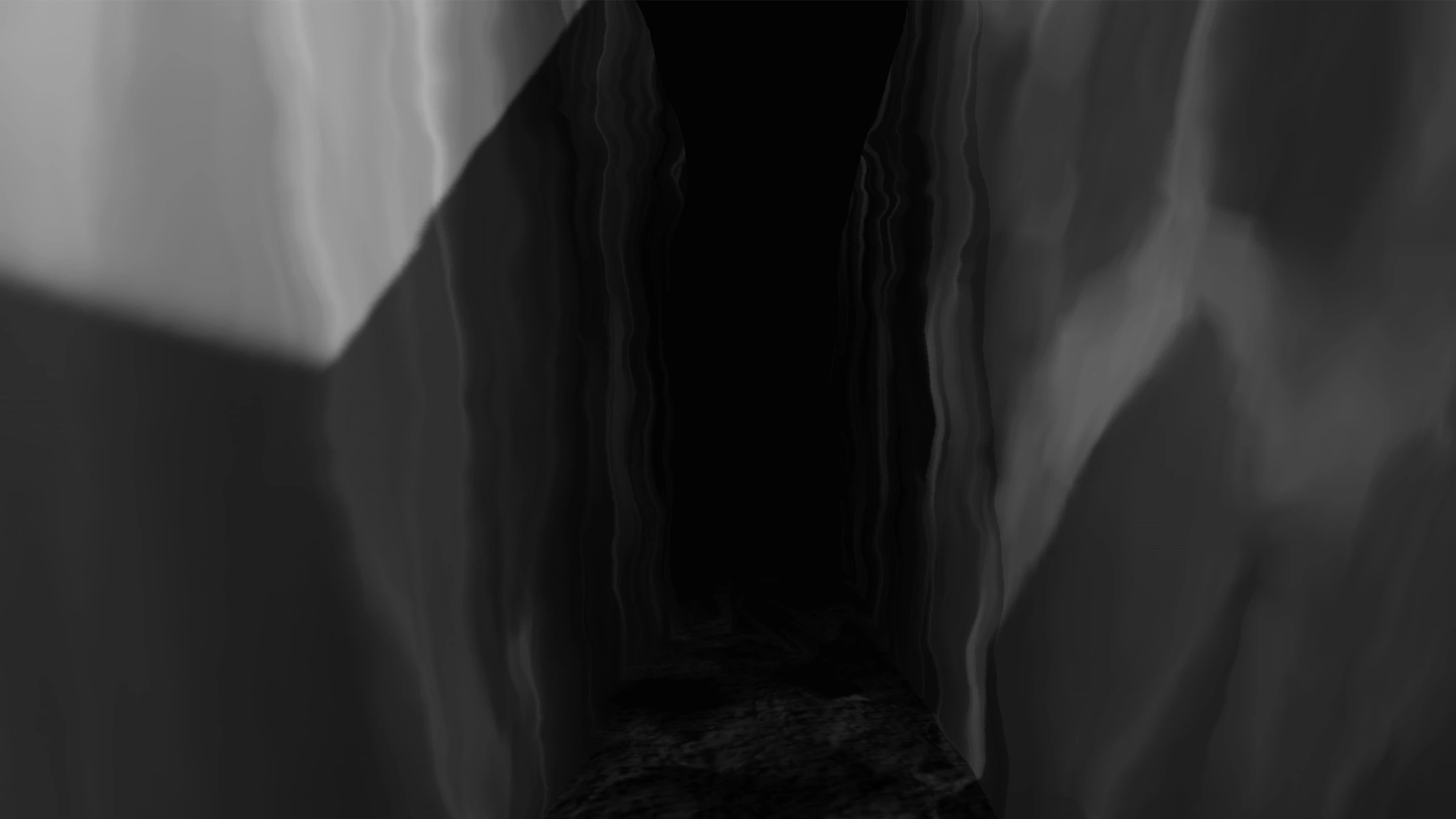
This piece doesn't show what we have already lost. It shows where we are headed.
The illustration renders the path forward as a dark, waterlogged shadow; draining of color as it goes, narrowing toward a world that has exhausted what made it livable. Not a sudden collapse but a gradual dimming, the kind that happens slowly enough that each step feels survivable until the color is gone entirely.
Lost in a Labyrinth of Choices
Every day, individuals make choices that compound into the trajectory the previous piece describes. Food, transport, consumption; the options that are cheapest and most convenient are rarely the ones that do the least damage.
The maze maps those choices. Most paths are gray and lead nowhere. Scattered through it are small pockets of green that grow, slowly, into a longer trail, and eventually into a clear path out. The green doesn't start as a road. It starts as a possibility, fragile and easy to miss, becoming more visible only as the pattern of choices accumulates. The maze is hard. The way through exists.
