Urban Research · Field Study
Wastewater Reuse in Agriculture
Field Studies on Wastewater Irrigation Economy and the Health Impacts of Wastewater Use in Agriculture
The Scale of the Problem
India is one of the world's most drought-prone countries, making every available water source a resource worth managing carefully. Sewage waters have the potential to irrigate millions of hectares of agricultural land annually, contribute significant quantities of plant nutrients, and support the livelihoods of agricultural workers across the country. The infrastructure to realize that potential does not exist.
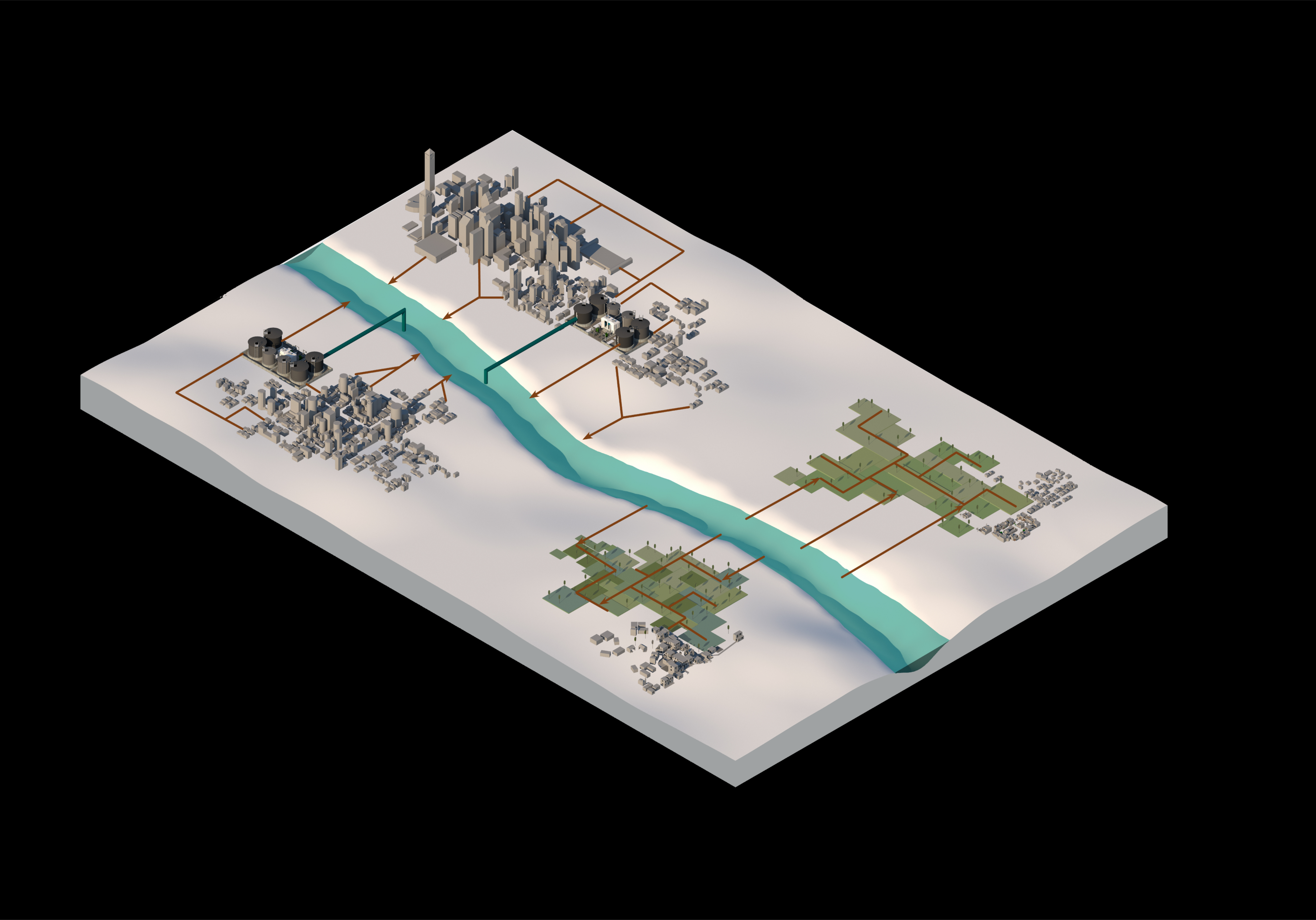
Instead, untreated or partially treated wastewater flows into drains and rivers, where downstream farmers use it regardless of treatment status, often because it is the only consistent water source available to them.
My Role
I was part of the field research team, working under the mentorship of Alka Palrecha. My contribution spanned the full research process: collecting water specimens, conducting interviews with farming communities, gathering and cleaning data, creating maps, and visualizing the findings.
Research Methods
The study combined multiple approaches to build a complete picture of how wastewater moves through agricultural systems and what it means for the communities that depend on it.
Tracking Waste at Treatment Plants
We mapped the treatment status of Sewage Treatment Plants across the study area, documenting which cities discharged semi-treated water and which released untreated water directly into drains and rivers.
Focused Group Discussions
We conducted discussions with farming villages downstream to understand how communities had adapted their livelihoods around wastewater irrigation, what risks they were aware of, and what alternatives, if any, were available to them.
Satellite Image Analysis
Satellite imagery of irrigated areas allowed us to map the scale of wastewater use across the region and identify patterns that ground-level observation alone could not capture.
Economic Comparison
The study also examined and compared the revenue of farmers using freshwater versus those using wastewater, quantifying the economic stakes for communities that have built their livelihoods around an imperfect system.
What the Field Study Found
Three findings stood out from the field research.
Treatment Gaps at Source
Sewage Treatment Plants across the study area varied significantly in their output. Some discharged semi-treated water, others released untreated water directly into drains. That water then flowed into rivers and was used by downstream farmers regardless of treatment status, because for many it was the only reliable water source available.

Natural Attenuation in Rivers
One unexpected finding was that as wastewater traveled downstream, the river itself performed a degree of natural treatment. Sunlight and distance helped break down certain chemicals, partially reducing contamination levels by the time the water reached farming communities further downstream.

Detergent Contamination in Soil
Foam from detergents and abrasive cleaning products was actively entering the irrigation system and accumulating in agricultural soils. Unlike some chemical contaminants that break down over time, detergent residue has lasting consequences for soil health and the plants grown in it, creating a health risk that travels through the food chain.


A More Realistic Intervention
One potential solution identified through the research was the separation of industrial and domestic waste at the source. Domestic wastewater, separated from industrial effluent, is significantly cleaner and more manageable. That separation could enable direct supply to farmers for safe on-site treatment, a more realistic pathway than building city-scale treatment infrastructure from scratch.
Outcome
The research findings and visualizations were presented at the Town-Hinterland Water and Nutrient Flows event at the IWMI-Tata Partners' Meet 2018, bringing the field study into a broader policy and research conversation about sustainable water management in India.